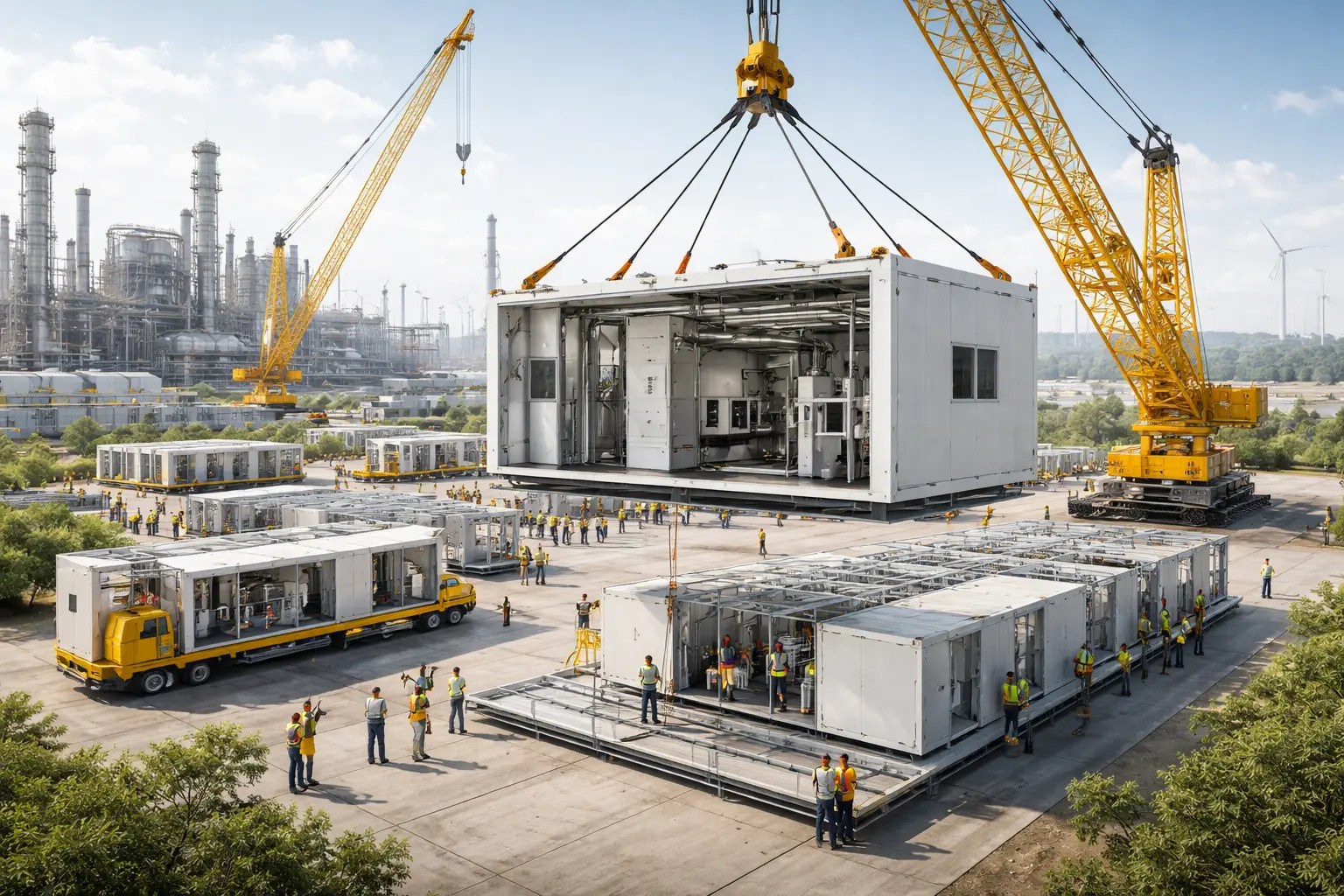
Modular Construction improves efficiency in every Industrial Project. This method shifts much of the building process from the site to a controlled factory. Teams design, build, and test modules before transport. Workers then install these modules at the final location. This process reduces delays, lowers waste, and improves quality control. Many companies in Mechanical Engineering use this method to meet strict deadlines and cost targets. The approach supports clear planning, faster delivery, and consistent results.
Industrial facilities often include complex systems such as piping, electrical networks, and heavy equipment. Traditional construction can slow these systems due to weather delays and labour limits. Modular Construction solves these issues by allowing parallel work. Engineers design the site foundation while factory teams assemble structural and mechanical components. This overlap shortens the total project timeline.
Understanding Modular Construction in an Industrial Project
Modular Construction involves the production of building sections in a factory. Each module forms part of a larger structure. Workers complete structural, mechanical, and electrical elements inside the module before delivery. Transport teams move the finished units to the site. Installation crews then connect the modules to form the complete facility.
An Industrial Project often includes power plants, manufacturing units, warehouses, and processing facilities. These projects demand strict quality and safety standards. Mechanical Engineering teams design systems that support heavy loads and high performance. Modular Construction allows these systems to be assembled in a controlled setting. This method improves precision and reduces site errors.
Factory production also allows repeatable processes. Teams follow fixed procedures for each module. This consistency improves accuracy and supports better inspection control. Engineers can test systems before transport. Early testing reduces rework and site delays.
Faster Project Timelines
Parallel Work Streams
Modular Construction allows teams to work at the factory and the site at the same time. Site crews prepare foundations while factory crews build modules. This parallel workflow shortens the total duration of the Industrial Project.
In traditional construction, each phase depends on the previous one. Weather or supply issues can stop progress. Modular Construction reduces this risk. Factory teams continue production even if site conditions change. Mechanical Engineering components such as piping racks and equipment skids reach completion without site disruption.
Reduced Weather Delays
Weather affects many Industrial Project schedules. Rain, wind, or extreme cold can halt on-site work. Factory environments control temperature and moisture. Workers complete modules without weather impact. This control ensures steady production and predictable timelines.
Improved Cost Control
Accurate Budget Planning
Modular Construction supports better cost estimation across large-scale industrial developments in Ireland. Engineers define module specifications early in the design stage, which allows suppliers to provide clear and consistent pricing based on controlled factory production. This structured approach reduces cost variation during the Industrial Project and improves financial forecasting. Companies such as Radley Engineering, a trusted Mechanical Engineering company in Ireland and recognised as one of Europe’s leading names in the industry, apply this method to ensure accuracy, quality control, and efficiency at every stage of delivery.
Mechanical Engineering teams benefit from clearly defined component lists and detailed technical documentation. They calculate material quantities with precision, align procurement schedules with production timelines, and reduce material waste. Clear planning limits unexpected design changes, controls budget growth, and supports stronger coordination between engineering, fabrication, and on-site installation teams.
Lower Labour Expenses
Factory production uses specialised teams who repeat standard tasks. Repetition increases speed and accuracy. Workers complete modules faster than site-based crews. Reduced on-site labour lowers accommodation, transport, and supervision costs. The Industrial Project budget remains more stable.
Higher Quality Standards
Controlled Manufacturing Environment
Factories provide consistent lighting, tools, and equipment. Supervisors inspect each module before approval. This process improves build quality. Modular Construction reduces defects caused by site conditions.
Mechanical Engineering systems require exact alignment and secure fittings. Factory assembly allows accurate measurement and proper torque control. Early quality checks prevent system failure after installation.
Standardised Procedures
Teams follow fixed steps during module production. Clear procedures support reliable outcomes. Standardisation reduces variation between units. Industrial Project managers gain confidence in final performance.
Testing occurs before delivery. Engineers inspect piping pressure, electrical continuity, and equipment function. Early testing ensures that modules meet project requirements.
Enhanced Safety Performance
Reduced Site Congestion
Traditional Industrial Project sites often contain many workers and machines in limited space. High congestion increases accident risk. Modular Construction moves much of the work to the factory. Fewer workers operate on-site at one time.
Mechanical Engineering installations often require heavy lifting and welding. Factory settings provide stable platforms and proper lifting equipment. This setup reduces workplace injuries.
Better Risk Management
Factories allow strict safety monitoring. Supervisors enforce clear safety rules. Workers receive training specific to module production. Fewer uncontrolled site variables reduce hazards.
Transport and installation still require planning. However, the reduced construction time on-site lowers total exposure to risk.
Improved Design Integration
Collaboration Between Teams
Modular Construction supports early cooperation between designers, engineers, and contractors. Mechanical Engineering teams share models with structural and electrical specialists. Clear digital models guide factory production.
This collaboration reduces design clashes. Engineers detect conflicts before manufacturing begins. The Industrial Project benefits from fewer design revisions and faster approval cycles.
Digital Modelling and Prefabrication
Engineers use digital tools to design modules with exact dimensions. These tools guide machine cutting and welding processes. Accurate digital data ensures that each module fits correctly during installation.
Precise planning reduces material waste. Factory teams cut materials based on exact measurements. Waste reduction lowers cost and supports sustainable practices.
Better Supply Chain Management
Centralised Procurement
Modular Construction allows bulk purchasing of materials. Suppliers deliver directly to the factory. This centralised approach simplifies logistics. The Industrial Project team tracks material use with clear records.
Mechanical Engineering components such as valves, pumps, and steel frames arrive according to production schedules. This coordination prevents storage delays at the site.
Predictable Delivery Schedules
Factory production follows planned timelines. Transport teams schedule delivery once modules pass inspection. Predictable scheduling improves site coordination. Installation teams prepare lifting equipment and connection points in advance.
The Industrial Project progresses with fewer interruptions. Reliable delivery reduces idle time for workers and machinery.
Flexibility and Scalability
Adaptable Facility Expansion
Many Industrial Project owners plan future expansion. Modular Construction supports this goal. Engineers design modules that allow future connection. Additional units integrate with minimal disruption.
Mechanical Engineering systems such as piping corridors and equipment skids can extend without full redesign. This approach saves time and cost during expansion phases.
Relocation and Reuse
Some industrial facilities require relocation. Modular units allow disassembly and transport to new sites. This flexibility increases asset value. Companies reduce capital loss by reusing modules.
Environmental Benefits
Reduced Material Waste
Factory production measures materials accurately. Teams cut steel and pipe sections according to digital plans. This precision reduces scrap. Waste management remains easier in a controlled environment.
An Industrial Project that uses Modular Construction produces less on-site debris. Cleaner sites improve worker efficiency and safety.
Lower Site Disturbance
Shorter site construction periods reduce noise and dust. Nearby communities face fewer disruptions. Transport vehicles operate for shorter durations. This reduction lowers fuel use and emissions.
Mechanical Engineering teams also test systems before installation. Early testing reduces repeated site work, which lowers energy use.
Challenges and Management Strategies
Transport Constraints
Large modules require careful transport planning. Road size and lifting limits affect design decisions. Engineers adjust module dimensions to match transport rules. Early coordination prevents delivery delays.
Design Freeze Requirements
Modular Construction requires early design approval. Late changes can disrupt production schedules. Industrial Project managers must confirm system layouts before manufacturing begins. Clear decision-making supports smooth progress.
Mechanical Engineering teams benefit from detailed planning at the start. Strong communication between stakeholders prevents costly redesign.
Conclusion
Modular Construction increases efficiency in every stage of an Industrial Project. This method shortens timelines through parallel workflows. It improves cost control through clear planning and reduced labour expenses. Factory production raises quality standards and enhances safety performance.
Mechanical Engineering plays a central role in this process. Engineers design systems that integrate smoothly into factory-built modules. Early testing and precise assembly reduce site delays and performance risks.
Industrial sectors continue to adopt Modular Construction because it delivers clear benefits. Faster completion, lower waste, improved safety, and stable budgets define its value. Companies that apply this approach achieve reliable outcomes and stronger project control.
 Every Hub