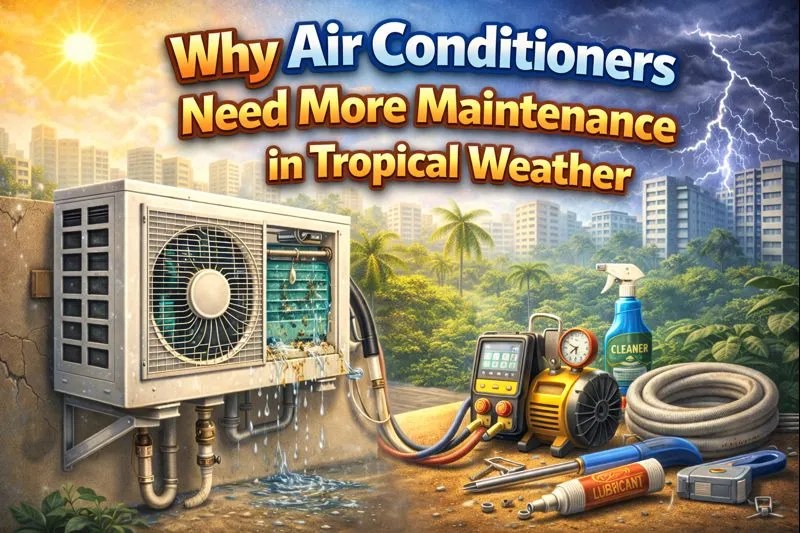
Air Conditioners work harder in Singapore homes than in many other regions. The main reason is Singapore’s Tropical Weather, which brings high heat, steady humidity, and frequent rainfall. These conditions place daily pressure on cooling systems. As a result, Air Conditioners need regular care to stay reliable and efficient. Without proper maintenance, units lose cooling power, use more electricity, and face early failure. This article explains why these issues occur and why routine service matters for Singapore homes in a warm and humid climate like Singapore.
Climate Conditions in Singapore and Their Impact on Air Conditioners
Singapore’s tropical weather stays hot and humid throughout the year, with high temperatures and constant moisture in the air. This environment directly affects how air conditioners operate on a daily basis. Units run for long hours to maintain indoor comfort, which leads to faster wear on internal components. Moist air enters the system and settles on coils, filters, and inner surfaces, causing buildup that blocks airflow and weakens cooling performance over time. In these conditions, routine servicing from Socool Aircon Servicing plays an important role in keeping systems clean, balanced, and efficient by addressing moisture-related issues before they affect operation.
High humidity also increases indoor heat load, forcing air conditioners to remove both heat and excess moisture at the same time. This added demand puts continuous pressure on compressors and fans. When systems operate under constant strain, minor faults can grow into larger problems if left unchecked. Consistent maintenance supports stable performance, helps control energy use, and ensures air conditioners continue to work reliably in Singapore homes despite the demanding climate.
Constant Usage in Singapore Homes
Many Singapore homes rely on Air Conditioners daily. Bedrooms, living rooms, and home offices often stay cooled for long periods. Unlike regions with seasonal cooling, Singapore’s Tropical Weather offers little relief during the year. This means Air Conditioners do not get long rest periods.
Constant operation causes filters to clog faster. Dust mixes with moisture and sticks to surfaces. Fans work harder to push air through blocked paths. Motors heat up due to extra effort. Maintenance removes this buildup and restores smooth airflow. Without service, energy use rises and cooling comfort drops across Singapore homes.
High Humidity and Moisture Buildup
Humidity plays a major role in maintenance needs. Moist air condenses inside Air Conditioners during cooling. Water forms on coils and drains into trays and pipes. In Singapore’s Tropical Weather, this process happens every day. If drainage systems clog, water backs up inside the unit.
Standing water leads to odor, leakage, and corrosion. Metal parts weaken over time. Electrical components face risk when moisture spreads. Routine maintenance clears drain lines and checks water flow. This step protects internal parts and keeps Air Conditioners safe for daily use in Singapore homes.
Dust, Pollution, and Urban Living
Singapore homes sit in an urban environment. Dust, traffic particles, and construction residue enter indoor spaces. Air Conditioners pull this air through filters. In humid conditions, particles stick together and form thick layers. These layers reduce airflow and trap heat inside the unit.
Dirty coils cannot release heat properly. As a result, the system runs longer to reach the same temperature. Maintenance cleans coils and filters to restore heat exchange. This cleaning step improves cooling speed and lowers stress on the compressor. Clean systems last longer and perform better in Singapore homes.
Effects of Heat on Internal Components
Heat affects every mechanical part. In Singapore’s Tropical Weather, outdoor units face direct sun and warm air. Compressors work in high temperatures for extended hours. Heat causes lubricants to thin and seals to weaken. Over time, this leads to leaks and part failure.
Maintenance includes checking oil levels, tightening connections, and inspecting insulation. These steps reduce heat damage and prevent sudden breakdowns. Proper care helps Air Conditioners handle the constant heat load common in Singapore homes.
Energy Use and Efficiency Loss
When Air Conditioners lack maintenance, efficiency drops. Blocked filters restrict airflow. Dirty coils trap heat. Fans spin longer to compensate. All these factors raise electricity use. In Singapore homes, where cooling runs daily, small efficiency losses add up fast.
Regular service restores airflow and heat transfer. This helps units cool rooms faster and shut off sooner. Lower run time saves energy and reduces monthly bills. Maintenance supports steady performance even during peak heat periods linked to Singapore’s Tropical Weather.
Indoor Air Quality Concerns
Air Conditioners influence indoor air quality. In humid climates, moisture inside units supports mold and bacteria growth. These organisms spread through air vents and affect breathing comfort. People may notice smells or irritation when systems lack cleaning.
Maintenance removes moisture buildup and cleans internal surfaces. Filters trap dust and particles before air enters rooms. Clean systems support healthier air in Singapore homes. This benefit matters for families who use Air Conditioners while sleeping or working indoors.
Outdoor Unit Exposure in Singapore Homes
Many Singapore homes place outdoor units on balconies, ledges, or rooftops. These areas face rain, sun, and debris. Leaves, dirt, and moisture collect around outdoor coils. Restricted airflow reduces heat release and raises system pressure.
Maintenance includes clearing debris and washing outdoor coils. Technicians also check fan blades and electrical parts. These steps help outdoor units manage heat and moisture better. Proper care prevents overload and keeps Air Conditioners stable in Singapore’s Tropical Weather.
Electrical Stress and Safety Risks
Moisture and heat affect electrical systems. Wires expand under heat and contract when cooling cycles end. Humidity increases corrosion risk at connection points. Over time, loose or corroded connections raise failure risk.
Maintenance checks electrical parts and secures connections. This reduces power loss and lowers safety risks. Reliable electrical flow helps Air Conditioners start smoothly and run without interruption in Singapore homes.
Drainage System Issues in Humid Climates
Drainage systems play a key role in Air Conditioners. They remove water collected during cooling. In Singapore’s Tropical Weather, drains face constant use. Dust and algae block pipes over time. When drains clog, water leaks indoors.
Routine maintenance flushes drain lines and checks slope alignment. Clear drainage prevents leaks and water damage. This care keeps Air Conditioners safe and clean for daily use in Singapore homes.
Wear on Fans and Motors
Fans move air across coils and into rooms. Motors power this movement. When airflow drops due to dirt or moisture, fans work harder. Motors heat up and wear faster. Bearings lose lubrication and create noise.
Maintenance includes cleaning fan blades and checking motor condition. Smooth operation reduces noise and improves cooling flow. This step extends equipment life and keeps comfort steady in Singapore homes.
Importance of Scheduled Maintenance
Scheduled maintenance supports long-term performance. In Singapore’s Tropical Weather, waiting for problems leads to higher repair costs. Small issues grow fast due to heat and humidity. Regular checks catch early signs of wear.
Service schedules help Air Conditioners stay efficient and reliable. Clean systems cool faster and use less power. Consistent care protects comfort in Singapore homes throughout the year.
Cost Control Through Preventive Care
Preventive maintenance saves money over time. Clean filters and coils reduce energy use. Early repairs avoid major part replacement. Systems last longer and delay the need for new units.
In Singapore homes, where Air Conditioners run daily, these savings matter. Maintenance supports steady budgets and avoids sudden breakdown costs during hot periods.
Adapting Maintenance Frequency to Singapore’s Climate
Maintenance frequency depends on climate and usage. In Singapore’s Tropical Weather, standard schedules may not suffice. High humidity and constant use require more frequent checks.
Many Singapore homes benefit from quarterly service. This schedule keeps systems clean and efficient. Adjusting maintenance to local conditions ensures Air Conditioners meet daily cooling demands.
Conclusion
Air Conditioners face unique challenges in Singapore homes due to Singapore’s Tropical Weather. Heat, humidity, and constant use increase wear on parts and reduce efficiency without care. Moisture buildup, dust, and electrical stress affect performance and safety. Regular maintenance addresses these issues and keeps systems reliable. Clean and well-serviced Air Conditioners cool better, use less energy, and last longer. In a warm and humid climate, routine care supports comfort and protects long-term investment in cooling systems.
 Every Hub