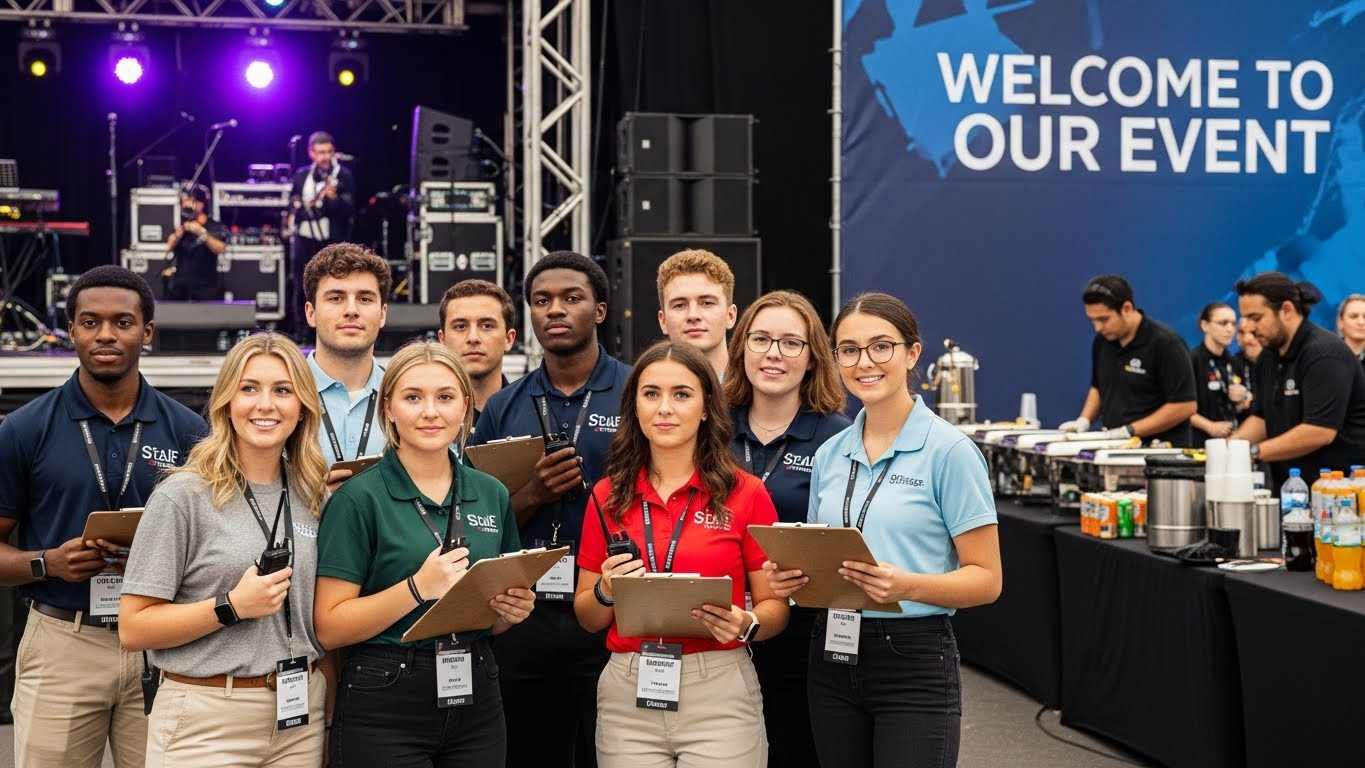
Event work can give students steady income, new skills, and strong confidence. Many students choose event staff roles because these roles offer flexible shifts and active tasks. This guide explains the main points students should understand before they enter event work. Each section uses clear language and a simple structure to support easy reading and NLP-friendly processing.
Understanding Event Work
Event work covers duties that support functions, shows, conferences, festivals, sports events, and corporate gatherings. Event staff help manage guests, control entry, guide visitors, arrange seating, and support basic site tasks. Students should know that event work runs on clear instructions and active duties. It suits people who enjoy movement and direct contact with guests.
Why Students Choose Event Staff Roles
Students often choose event staff roles because these jobs offer short shifts, weekend work, and evening schedules that fit neatly around academic commitments. These flexible hours allow them to balance study demands without feeling overwhelmed. At Brightsparks, this practical approach to student-friendly work is understood well, which is why roles are matched with the needs of young people who prefer adaptable and manageable schedules. This connection between work patterns and study routines helps students stay consistent with both their education and part-time responsibilities.
Event work also exposes students to a wide range of people and different working environments. This variety helps them learn how to communicate clearly, stay organised during busy events, and collaborate with teams under pressure. Such experience strengthens their confidence and builds problem-solving habits that benefit them in future roles. Over time, these skills become valuable stepping stones for careers, making event staffing a popular and rewarding choice for many students.
The Main Tasks in Event Work
Students should understand core tasks before they start.
Guest Management
Guest management means greeting visitors, checking entry passes, offering directions, and answering simple questions. Students must speak clearly, stay calm, and keep a friendly tone. Guest management is one of the most common roles for new event staff.
Crowd Control Support
Some events bring large crowds. Event staff may help guide lines, keep walking routes clear, and pass updates to supervisors. Clear communication helps reduce confusion or pressure in busy areas.
Setup and Pack-Down
Setup tasks may include arranging chairs, placing signs, preparing tables, or setting entry stations. Pack-down tasks involve removing signs, lifting items, sorting materials, or cleaning areas. These jobs require steady focus and safe handling of equipment.
Information Support
Many events have information desks. Students may provide basic event details, show maps, and help guests find their seats or sections. This role fits people who enjoy direct communication.
Skills Students Should Build Before Joining Event Staff Teams
Clear Communication
Event work depends on clear instructions. Students should practise simple, direct speech. Short sentences reduce errors. Polite language builds trust with guests.
Teamwork
Event staff roles require strong teamwork. Students must follow supervisors, support colleagues, and pass information quickly. Smooth teamwork helps the whole event run well.
Time Management
Events follow tight schedules. Students should arrive early, prepare their area, and stay ready for sudden changes. Good time habits help event organisers maintain flow.
Physical Readiness
Many event shifts involve walking, standing, lifting, or guiding guests. Students should prepare for physical tasks. Comfortable shoes, proper rest, and steady pace help maintain energy.
Problem-Solving
Students may face sudden questions, changes in lines, or unexpected delays. Good event staff stay calm, think fast, and give simple solutions.
What Students Should Expect on Their First Event Shift
A Structured Briefing
Most events start with a briefing. Supervisors give instructions, explain duties, and outline safety rules. Students should listen carefully and note key points.
Uniform or Dress Code
Event staff often follow a set dress code such as black trousers, plain shirts, or event-provided shirts. Students should check the dress code in advance.
A Busy Environment
Events can feel fast and loud. Students should stay focused on instructions and avoid distractions. Busy environments teach students how to stay calm and steady.
Support from Supervisors
Supervisors guide new staff. Students can ask for help if they feel unsure. Event work is team-based, so support is always available.
Safety Rules Students Must Know
Emergency Procedures
Students should learn emergency exits, first aid points, and contact persons. Good awareness helps protect guests and staff.
Safe Handling of Equipment
Some tasks require lifting, carrying, or placing items. Students should use safe techniques to avoid injuries.
Clear Pathways
Event staff must keep walkways and exits clear at all times. Clear pathways support flow and safety.
How Students Can Prepare Before Applying for Event Work
Build a Simple CV
Students should create a short CV. It should highlight communication ability, teamwork, time management, and any past service experience.
Learn Basic Customer Service
Simple customer service skills help with guest interaction. These include greeting guests politely, listening carefully, and answering with clarity.
Practise Standing and Walking for Long Durations
Since event staff remain on their feet for long hours, students should practise steady pacing.
Research Common Event Sites
Students can explore common venues used for concerts, conferences, or festivals. This gives a basic understanding of typical layouts.
Advantages of Event Work for Students
Flexible Schedules
Most event staff shifts suit the study routine. Students can work weekends or evenings.
Income Support
Event work gives students a steady source of income without long-term commitments.
Skill Growth
Students gain communication skills, teamwork habits, confidence, time discipline, and guest service experience.
Exposure to Many Industries
Events happen in sports, fashion, business, entertainment, and education. Students gain valuable insight into many fields.
Challenges Students Should Understand
Long Hours
Events may require long shifts. Students should keep good energy through rest, hydration, and proper meals.
Standing for Extended Periods
Standing for many hours can feel tiring. Students should wear comfortable shoes.
Sudden Changes
Plans can change quickly. Event staff must stay flexible and follow new instructions.
Handling Difficult Guests
Sometimes guests feel impatient or confused. Students should stay calm, use clear language, and ask supervisors for help when needed.
Tips for Students to Succeed in Event Staff Roles
Stay Polite
Polite speech creates a positive experience for guests.
Follow Instructions
Event work depends on clear direction. Students should listen carefully and follow instructions fully.
Keep a Professional Attitude
A steady and helpful attitude builds trust with guests and supervisors.
Report Issues Early
If a problem appears, students should report it at once. Quick action helps keep the event running smoothly.
Maintain Personal Presentation
Clean clothing, neat appearance, and confident posture support professional standards.
How to Build Long-Term Value from Event Work
Many students use event work as a start. With steady performance, students can step into higher event roles such as supervisor, team leader, or coordinator. These roles offer more responsibility and stronger pay. Students who show good behaviour, strong work ethic, and fast learning often gain long-term opportunities.
Conclusion
Event work gives students a clear chance to earn income, gain skills, and build confidence. Event staff roles support large gatherings, so students must prepare for busy tasks, active environments, and steady communication. With good preparation, students can develop strong teamwork habits, improve time discipline, and understand guest service more deeply. Event work also helps students grow in real-life situations, making it a strong option for students who seek practical experience and flexible schedules.
 Every Hub